Bedding & nursery care
Naturepedic Crib Bedding: Choosing Between Flat and Fitted Waterproof Layers
A nursery layer may look like a small decision, but its shape can change how it is placed, laundered, and kept in position. Naturepedic’s flat and fitted waterproof crib options share a practical purpose: helping protect the mattress beneath a fitted sheet. Their differences are in the details of construction and everyday handling—and any choice must remain consistent with current safe-sleep guidance and the crib and mattress manufacturers’ instructions.
Published November 20, 2026
The quiet role of a waterproof crib layer
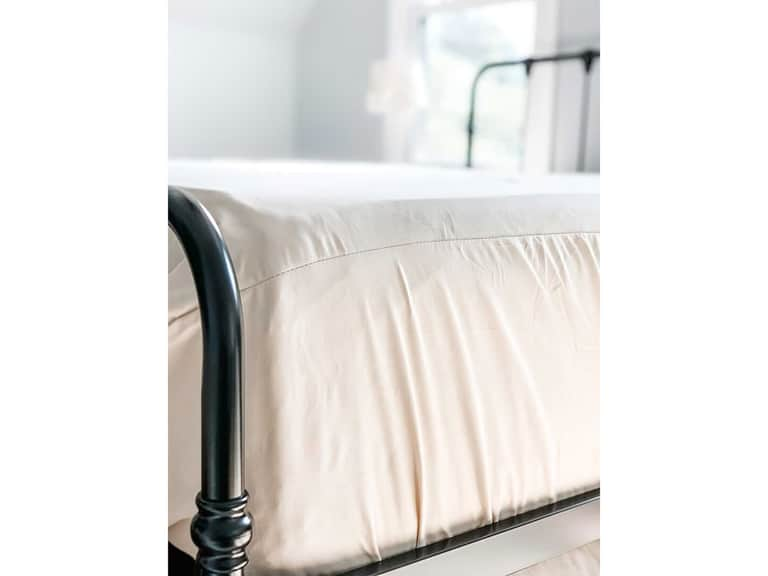
In a carefully considered nursery, the most useful objects are often the least conspicuous. A waterproof layer sits out of sight beneath the fitted sheet, helping shield the mattress from everyday moisture and making routine clean-up more manageable. It is not a substitute for a clean sheet, a correctly fitted mattress, or a safe sleep space. Rather, it is a bedding component whose usefulness depends on fit, care, and appropriate use.
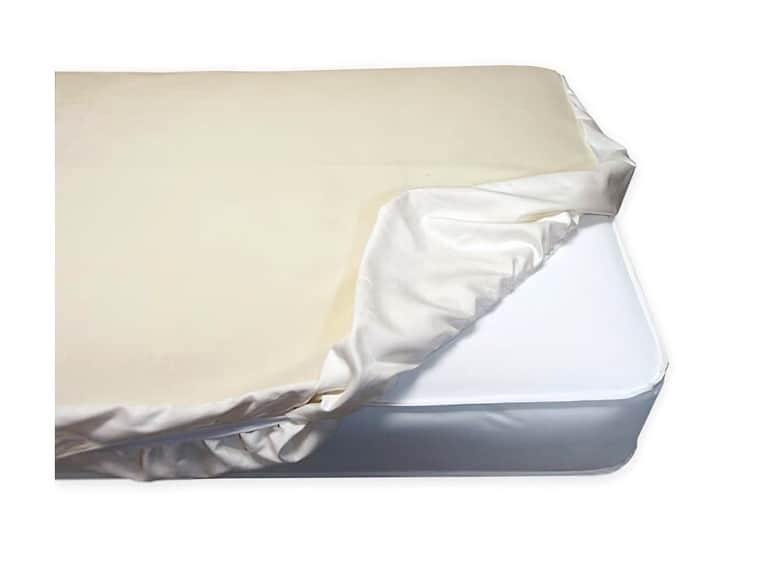
The word “waterproof” describes a function, not a complete account of how a pad feels or behaves. A crib layer also has a top fabric, an underlying surface, seams or edges, and a particular way of attaching to the mattress. Naturepedic’s flat waterproof crib pad and fitted waterproof crib pad are both described as organic-cotton options with a thin waterproof membrane between outer cotton layers. One is laid flat beneath the sheet; the other uses elastic around its perimeter to hold it on the mattress.
Those distinctions matter in a nursery where laundry is frequent and caregivers value an uncomplicated reset. Yet no material or design should be treated as a guarantee of safety, allergy relief, temperature control, or a better night’s sleep. The considered choice is the one that matches the actual crib and mattress, can be maintained according to its care label, and does not conflict with current infant safe-sleep recommendations.
Flat or fitted: two shapes, two routines
A flat pad is a rectangular layer without an elasticized skirt around the mattress. Naturepedic’s flat crib option is described as having a soft organic cotton flannel surface, an organic cotton muslin underside, and a thin waterproof inner layer. It measures 28 by 52 inches and is intended to be placed beneath a crib sheet. Because it is not shaped to hug the mattress, its position depends on the way it is placed and covered.
That straightforward construction can appeal to caregivers who prefer a simple layer that can be removed and washed independently. It also means there is no full elastic edge to stretch over the mattress. Before use, check the product instructions and make sure the pad lies flat, is fully covered as directed, and does not bunch, fold, or shift. If it will not remain in the intended position, do not improvise a fastening method or add extra bedding to hold it down.
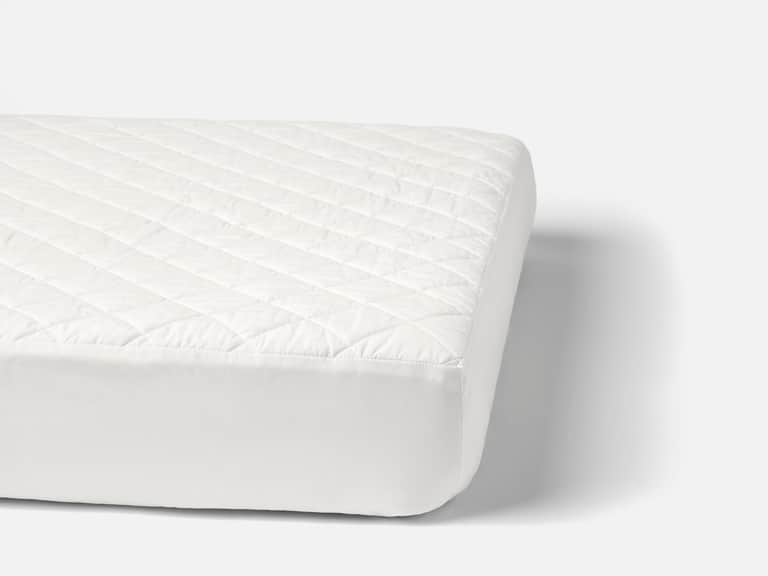
The fitted version is made to sit around the mattress, with elastic all the way around its edge. Naturepedic describes its crib model as having organic cotton flannel on top, organic cotton muslin underneath, and a thin waterproof membrane between them. Its stated dimensions are 28 by 52 inches. The elasticized perimeter is designed to make placement more like fitting a sheet: the edge stretches around the mattress rather than resting loose beneath it.
In daily use, that distinction can make the fitted style feel more contained when it is installed correctly. It does not remove the need to check that the layer fits the specific mattress securely and remains smooth beneath the fitted sheet. Elastic, dimensions, mattress thickness, and the particular crib setup all matter. A fitted label alone is not proof of compatibility.
A useful shorthand:
- Flat: a separate rectangular pad placed beneath the fitted sheet, with no elastic perimeter.
- Fitted: a shaped pad with all-around elastic intended to hold around the mattress.
- Both: waterproof crib layers that should be used only as directed and checked against current safe-sleep guidance.
What the materials tell you—and what they do not
For both Naturepedic crib styles, the listed construction pairs cotton fabric with a thin waterproof layer. The flat design specifies flannel on the top, muslin on the bottom, and a waterproof inner membrane. The fitted design likewise describes cotton flannel and muslin surrounding a thin waterproof membrane. This layered approach is intended to place a soft textile surface against the sheet while providing a barrier beneath it.
That description is useful for understanding the product, but it should not be stretched into claims the information does not establish. “Organic cotton” identifies a material and, where applicable, certification should be checked on the product’s own label or documentation. It does not automatically mean that a product prevents allergies, eliminates chemical exposure, improves sleep, or is appropriate for every infant or every mattress. Families with material sensitivities or specific medical questions should seek guidance from a qualified health professional and review the product’s full specifications.
Similarly, a waterproof membrane can help limit liquid from reaching the mattress, but performance depends on correct installation, the condition of the item, and the manufacturer’s directions. Inspect the layer periodically for damage, changes in texture, loose elastic, or seams that appear compromised. Replace it if it no longer lies flat or functions as intended. The product description is a starting point; the care label and current manufacturer instructions are the authority for its use.
These crib pads are distinct from a mattress topper. A topper is generally intended to alter the feel or height of a sleep surface; a waterproof pad is designed as a protective layer. For an infant sleep space, do not select a layer for added softness or cushioning. The mattress should remain firm, flat, and appropriately sized for the crib, and bedding should be limited in line with current safe-sleep recommendations.
Start with the crib and mattress—not the color of the nursery
Before choosing between flat and fitted waterproof crib bedding, confirm the dimensions and configuration of the mattress. The Naturepedic flat and fitted descriptions both list a 28-by-52-inch size, but that does not establish compatibility with every crib, mattress, or mattress cover. Check the crib and mattress manuals, including any guidance on approved accessories and the required fit between the mattress and crib.
A correctly sized mattress should fit the crib as specified by its manufacturer. A pad should not interfere with that fit, create an uneven surface, or leave excess fabric that can bunch. Do not assume that matching the commonly used 28-by-52-inch dimensions is enough: mattress thickness and construction, edge design, and manufacturer requirements can also affect how a layer sits. If you are unsure whether a pad is compatible, consult the crib or mattress manufacturer before using it.
Next, consider how the product is meant to be layered. Naturepedic describes the flat pad as sitting under a fitted sheet. The fitted pad is designed to stretch over the mattress, with a fitted sheet then used as directed. Keep the setup simple. Avoid adding multiple protective layers or extra blankets, pillows, positioners, or other soft items to an infant’s sleep space. Current safe-sleep guidance should take priority over product styling, convenience, or a desire to add cushioning.
Finally, consider your laundry routine. If quick removal and a simple rectangular shape appeal to you, a flat pad may suit the way you manage bedding—provided it remains correctly positioned and is used according to instructions. If you prefer an elasticized edge, the fitted option may be more familiar to install. In either case, plan for a clean, dry replacement sheet when laundering is needed, and follow the manufacturer’s directions rather than relying on assumptions about wash temperature or drying.
Safe sleep is the non-negotiable design principle
Nursery products can make care routines easier, but product descriptions are not a substitute for medical or public-health guidance. Infant safe-sleep recommendations can be updated; consult current guidance from a recognized health authority, such as the American Academy of Pediatrics or the relevant public-health agency in your country. Follow it alongside the crib and mattress manufacturers’ instructions.
In general, safe-sleep guidance emphasizes placing an infant on their back for sleep, using a firm, flat sleep surface designed for the infant, and keeping the sleep space clear of loose bedding and soft objects. The fitted sheet should be appropriate for the mattress and remain secure. A waterproof pad, if used, must be permitted by the crib and mattress instructions and installed exactly as its manufacturer directs. If guidance or product instructions appear to conflict, pause and ask the relevant manufacturer or a qualified health professional rather than guessing.
In particular, do not use a pad to soften a mattress, fill a gap, or change the height of the sleep surface. Do not tuck, tie, pin, or otherwise modify a layer to make it fit. Avoid products whose size or construction is uncertain, and stop using a pad if it becomes loose, damaged, or difficult to keep smooth. A familiar brand name or an organic-material claim does not override safe-sleep requirements.
Caregivers may also be weighing concerns about moisture, allergens, or household exposures. A waterproof crib pad can provide a practical barrier to spills, but it should not be presented as treatment for a health condition or as a replacement for cleaning. For allergy symptoms, skin concerns, breathing issues, or questions about an infant’s sleep environment, ask the child’s clinician for advice tailored to the situation.
Care that protects the fabric and the function
Both Naturepedic crib-pad descriptions state that the products can be machine washed and dried. The flat pad’s listed care instructions are machine wash and dry; the fitted version is also described as machine washable and dryable. Specific cycles, detergent guidance, temperature limits, and drying instructions should be checked on the current product label, since product guidance can change and the label is the best source for the item in hand.
After washing, make sure the pad is fully dry before it is returned to the crib. A damp layer can be uncomfortable and may be unsuitable for storage or use; do not put bedding back into service while moisture remains. Once dry, check its shape and condition. For the fitted design, look at the elastic and confirm that the edge still stretches and lies evenly. For the flat design, inspect the fabric and membrane for damage and make sure the pad remains smooth when positioned as directed.
Routine care is also an opportunity to reconsider fit. A pad that has shrunk, stretched, torn, or become difficult to position may no longer be appropriate. Do not compensate by layering another pad, folding it, or securing it with an unapproved device. Replace it with an option that meets the crib and mattress requirements, or use the sleep surface as directed without the accessory.
Keep spare bedding clean and dry, and store it away from damp areas. Follow the product’s own washing and storage directions; avoid adding cleaning agents or treatments that the manufacturer does not recommend. Care labels are not decorative fine print: they help preserve the textile, the elastic, and the waterproof construction.
A considered comparison
| Consideration | Flat waterproof pad | Fitted waterproof pad |
|---|---|---|
| Shape | Rectangular layer without an elasticized perimeter. | Elastic all the way around, designed to fit over the mattress. |
| Listed construction | Organic cotton flannel top, organic cotton muslin underside, thin waterproof inner layer. | Organic cotton flannel and muslin with a thin waterproof membrane between them. |
| Listed dimensions | 28 by 52 inches. | 28 by 52 inches. |
| Everyday question | Can it lie flat and remain positioned as directed beneath the sheet? | Does the elastic fit the actual mattress securely without bunching? |
| Care | Machine wash and dry, following the current product label. | Machine wash and dry, following the current product label. |
Specifications are summarized from the available product descriptions. Confirm current materials, dimensions, care directions, and compatibility with the manufacturer before use.
How to choose without overcomplicating it
There is no universally best shape. The decision can be made with a short, practical checklist. First, verify that the crib and mattress instructions allow the accessory. Second, compare the pad’s stated dimensions and construction with the mattress you own. Third, decide whether you prefer a flat layer or an all-around elastic fit, while keeping the bedding smooth and secure. Fourth, check that you are comfortable following the care instructions and inspecting the pad regularly.
If the fitted style seems convenient, make sure the elastic does not create a lumpy or uneven surface and that the pad sits securely over the mattress. If the flat style appeals, follow its positioning instructions closely and do not use it if it shifts or folds. Convenience matters, but it is secondary to compatibility and safe use.
For a direct look at the Naturepedic models described here, see the Naturepedic waterproof organic cotton crib mattress pad, flat style and the Naturepedic waterproof organic cotton crib mattress pad, fitted style. Review the current product information and instructions before deciding. A product page can help explain the construction, but it cannot establish that a particular pad is suitable for every crib or child.
Frequently asked questions
Can a flat waterproof pad be placed under a crib sheet?
Naturepedic describes its flat crib pad as a layer that can be placed beneath a fitted sheet. Follow the current instructions for the exact product, confirm that the crib and mattress manufacturers permit it, and make sure it lies flat without bunching or shifting. Safe-sleep guidance takes priority.
Does a fitted pad mean the mattress is automatically compatible?
No. Elastic helps the pad fit around a mattress, but you should still confirm dimensions, mattress thickness, crib requirements, and the product’s fit instructions. A fitted style should not be used if it cannot be installed securely and smoothly.
Are flat and fitted Naturepedic crib pads made from the same materials?
The available descriptions identify organic cotton fabrics and a thin waterproof membrane in both designs. The flat model specifies a flannel top and muslin underside; the fitted model also describes flannel and muslin layers around a waterproof inner layer. Check the current label or manufacturer information for exact specifications.
Can a waterproof layer make a crib mattress softer?
It should not be chosen or used for that purpose. Do not add a mattress pad to soften, cushion, or alter an infant’s sleep surface. Use only products allowed by the crib and mattress instructions, and follow current safe-sleep guidance.
How often should a crib pad be washed?
Follow the product label and wash it when needed for cleanliness. After laundering, dry it completely and inspect it for damage, changes in fit, or deterioration. Do not rely on a general schedule if the manufacturer gives specific care instructions.
The final measure: a simple, suitable sleep setup
Flat and fitted waterproof crib layers answer the same basic household need in different ways. The flat version offers a rectangular layer without elastic; the fitted version is designed to stretch around the mattress. Both Naturepedic options are described with cotton fabrics and a thin waterproof membrane, and both are listed as machine washable. The practical difference is how each is positioned and held in place—not a reason to add softness or complexity to an infant’s sleep space.
Begin with the crib and mattress instructions, verify size and fit, and follow the current product care label. Keep the sleep space consistent with up-to-date safe-sleep recommendations. When an accessory cannot be made to sit correctly, when its compatibility is uncertain, or when guidance is unclear, leave it out until you have reliable advice. In a nursery, elegance is not excess; it is the calm confidence of a clean, simple setup that works as intended.