Bedding · Comfort & materials
Pairing a Latex Pad with an Organic Mattress: What to Know
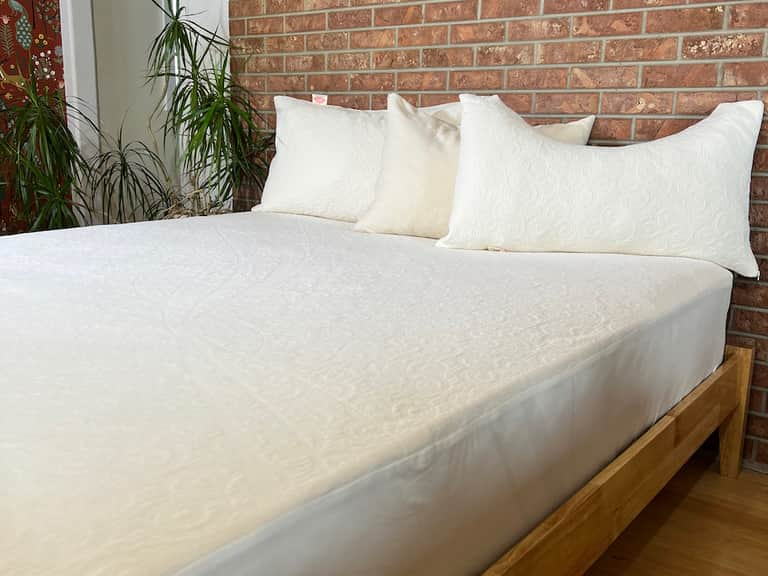
A latex pad can soften, cushion, or subtly reshape the feel of an organic mattress. But beneath the quiet elegance of a well-made bed, the practical details matter: the mattress’s construction, the pad’s thickness and cover, the fit of the layers, and the way you want your sleep surface to feel.
Published October 18, 2026
Natural latex has a distinctive character: buoyant rather than enveloping, responsive rather than slow to rebound. An organic latex mattress may already have been chosen for precisely that balance of contouring and support. Adding a latex pad can refine the experience, but it can also change the qualities that made the mattress appealing in the first place.
That is why the question is not simply whether latex pairs with latex. It is whether another layer serves a clear purpose, and whether its construction works with the mattress beneath it. A well-considered combination can make a sleep surface feel more accommodating or better suited to changing preferences. An arbitrary one may add bulk, warmth, movement, or maintenance without solving the original problem.
This guide explains how to think through compatibility, materials, thickness, firmness, fit, and care. It also distinguishes a comfort pad from a mattress protector, two pieces of bedding that are sometimes treated as interchangeable even though they do different jobs.
First, clarify what you want the extra layer to do
Before comparing materials, name the change you are hoping to make. “More comfortable” can mean several different things: a softer first impression, gentler cushioning at the shoulders, a slightly different surface feel, or protection against everyday wear. These needs call for different solutions. A comfort layer is not automatically a protector, and a protector is not necessarily designed to alter firmness.
- For a softer surface: A responsive latex pad may add cushioning while retaining some of latex’s springy feel.
- For more pressure relief: Thickness, firmness, and your sleeping position may matter more than the material name alone.
- For mattress protection: Look for a protector designed to guard against the specific risks you need to manage, such as perspiration, spills, or allergens. A comfort pad may not provide a waterproof barrier.
- For a different overall mattress feel: Consider whether the mattress itself is still within its return or adjustment period, and consult its care and warranty guidance before adding another layer.
There is no universal rule that a latex mattress needs a latex pad. If the existing surface already feels supportive and comfortable, leaving it as it is may be the most useful choice. Additional bedding is most successful when it addresses a specific, observed issue rather than an imagined improvement.
Understand the mattress underneath
“Organic mattress” describes a broad category, not one standard construction. A mattress may use latex in one or more comfort or support layers, combine latex with other materials, or have a cover and quilting that influence the surface feel. Organic certification and natural-material claims also refer to particular materials or production standards; they do not, on their own, tell you how firm the mattress will feel or whether a particular pad will fit.
Start with the manufacturer’s specifications. Check whether the mattress is made from one latex layer or several, whether its comfort layers have different firmness levels, and whether the cover is intended to stretch over the surface. A thick or tightly quilted cover can affect how clearly you feel the pad beneath your sheet. A flexible cover may allow the mattress and pad to move more naturally together, while a less flexible one can make a soft layer feel more muted.
Also note the mattress’s height and the depth of its existing layers. Those measurements matter not only for compatibility but for fitted-sheet sizing. Adding a pad increases the total height of the sleep surface; a sheet that once fit neatly may pull at the corners or come loose during the night.
If your mattress has adjustable components, a removable comfort layer, or specific instructions about toppers and protectors, follow those instructions first. The maker’s guidance is the best starting point for questions about construction, care, and warranty terms. A general bedding recommendation should never override product-specific directions.
What a latex pad can—and cannot—change
A latex pad adds a layer between the sleeper and the mattress. Depending on its firmness and thickness, it may make the surface feel more yielding, provide a little extra cushioning, or change how quickly the bed responds when you move. Latex is often valued for resilience: it compresses under weight and tends to recover its shape rather than remaining deeply indented in the way some slower-response materials can.
Those qualities are not identical across every latex pad. The feel depends on the specific latex formulation, how it is processed, its density and firmness, its thickness, and the textile cover around it. Labels such as “natural,” “organic,” or “latex” do not replace the need to read the full specifications. A thin, firm layer and a thicker, softer one may produce quite different results even when both use similar raw material.
A pad can adjust the surface impression, but it cannot reliably correct every underlying support problem. If a mattress is sagging, damaged, or no longer supporting you evenly, a new comfort layer may disguise the issue temporarily without resolving it. Similarly, if discomfort is persistent or related to a health condition, bedding changes are not a substitute for professional advice.
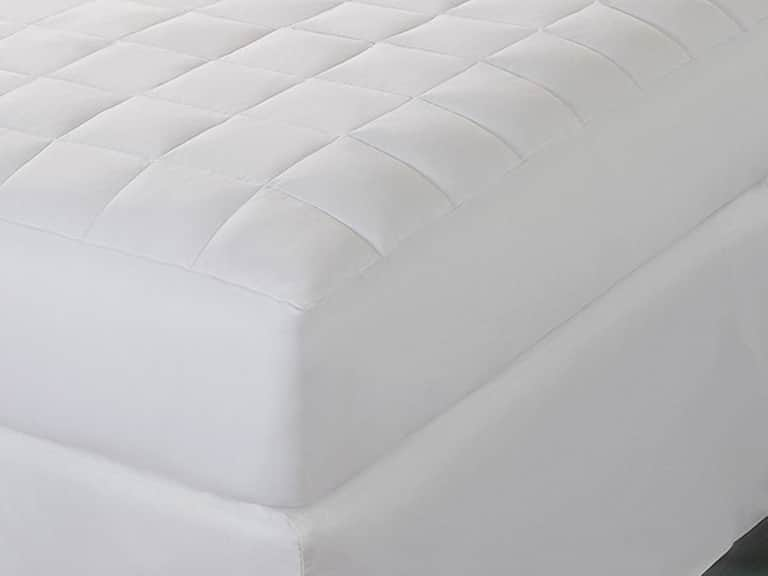
It is also worth separating a latex pad from a mattress topper in product language. Some sellers use the terms differently. Check the dimensions and construction rather than relying on the name: how thick is it, what is inside, what does the cover do, and is it meant to provide cushioning, protection, or both?
Thickness and firmness: the small decisions with a big effect
Thickness is one of the clearest clues to how much a pad may change the mattress. A thin layer is more likely to make a subtle adjustment, while a thicker layer has greater potential to alter the feel and height of the sleep surface. More thickness is not automatically more comfortable. It can shift the balance of a carefully designed mattress and may change how much you sink into the combined layers.
Firmness should be considered in relation to the mattress, not in isolation. A soft pad over a soft mattress may feel too yielding for some sleepers. A firmer pad may preserve a more level surface but offer less of the plushness someone is seeking. Because firmness descriptions are not perfectly standardized among manufacturers, specifications and, where possible, a clear trial or return policy are more useful than a label alone.
Sleeping position can help frame the decision, though it cannot predict individual comfort precisely. Side sleepers often look for enough cushioning around pressure-sensitive areas; back and stomach sleepers may prefer a surface that feels less yielding. Body shape, personal preference, and the mattress’s existing firmness all influence the outcome. Treat these as considerations, not prescriptions.
If you are uncertain, favor a modest change and test it thoughtfully. Give yourself time to notice how the combination feels over several nights, but avoid changing multiple parts of the bed at once. Keeping the mattress, pillow, and bedding consistent during a trial makes it easier to judge whether the latex pad itself is helping.
Materials, certifications, and the language of “organic”
For shoppers seeking an organic sleep environment, material transparency matters. Read the product description for the pad’s core, cover, seams, and any adhesives or backing materials identified by the manufacturer. A product may contain latex while using a different textile cover, or it may be wrapped in cotton or wool. Each component can influence touch, breathability, care, and the claims that can appropriately be made about the finished item.
Certifications can help clarify particular standards, but their scope varies. Check which organization issued a certification and which materials or stages of production it covers. A certification for one component should not automatically be interpreted as certification of every part of the product. “Natural” and “organic” are not interchangeable terms, and neither guarantees that a pad will suit your preferred firmness or temperature.
People with known sensitivities should review the complete materials list and ask the manufacturer direct questions when information is incomplete. Avoid assuming that a natural material is suitable for every person. If a latex allergy is a concern, speak with a qualified medical professional and seek product-specific guidance before bringing latex bedding into the sleep environment. Do not rely on marketing language to assess a medical risk.
Consider the cover as carefully as the filling. A cover affects the way the pad feels under a fitted sheet and can influence how readily the layers move together. Its care instructions may differ from those for the latex core. A removable cover can simplify routine cleaning if the manufacturer allows it to be washed; a non-removable cover may require different spot-care practices.
Fit is part of comfort
A compatible pad should lie flat, stay in place, and work with the mattress’s dimensions. Confirm the exact bed size and measure the mattress, including its depth. Do not assume that every queen-size mattress has identical dimensions or that a generously described fit will accommodate every profile. A pad that is too small may pull or shift; one that is too large can bunch beneath the sheet.
Look closely at how the pad attaches. Some designs have fitted skirts or elasticized sides; others rest on the mattress without a deep pocket. Check the stated depth range and compare it with the mattress plus any existing protective layer. Elastic construction that is overstretched can place tension on seams and make the pad less secure.
The order of layers also matters. In a typical arrangement, the mattress pad sits over the mattress and beneath the sheet, but a separate protector may be intended to sit either directly against the mattress or over a comfort layer. Follow the directions supplied with both items. The goal is a smooth, stable surface—not a crowded stack that slides, traps heat, or prevents the sheet from fitting properly.
After making the bed, check the corners and edges. Walk around the mattress, sit briefly at the side, and make sure the layers have not shifted. If the sheet strains or the pad gathers when you move, reassess the size and layering rather than trying to force an awkward fit.
Temperature, airflow, and the feel of a layered bed
Latex is often associated with a buoyant, less enveloping feel, but the sleep temperature of a finished bed depends on more than its core material. The mattress cover, pad cover, sheets, room temperature, humidity, sleepwear, and the number of layers all play a part. A thick pad or dense textile can change the overall experience, even if the latex itself is described as breathable.
If you tend to sleep warm, examine the complete construction instead of relying on a single “cooling” claim. Check whether the cover is woven or knit, whether the pad has additional quilting, and whether a waterproof membrane or other backing is present. A protective barrier may be useful for hygiene, but its effect on feel and airflow varies by design. Product descriptions and care guidance should explain what the layer is intended to do.
Give a new combination a fair test in the conditions where you normally sleep. A bed that feels comfortable for a few minutes in a cool showroom or guest room may feel different through a full night. Keep the bedroom temperature and top bedding reasonably consistent while assessing the change, and note whether warmth, humidity, or shifting layers become an issue.
Care, cleaning, and the long view
Latex and its surrounding textiles may have different care requirements. Never assume that a latex core is machine washable or that a removable-looking cover can safely go into a washer. Read the care label and manufacturer’s instructions before cleaning. Some products call for spot cleaning; others may permit laundering of the cover only. Incorrect washing, heat, or handling can affect the shape and longevity of a layer.
Use a mattress protector if you need a dedicated barrier against moisture or spills, and confirm that it is compatible with the pad and mattress. A comfort pad should not be expected to replace a waterproof protector unless the product is specifically designed and described for that purpose. Keeping layers clean is easier when each one has a clear role and a care routine suited to its materials.
Allow bedding to dry fully before making the bed again, particularly after spot cleaning. Damp layers enclosed under sheets can take longer to air and may develop unpleasant odors. Follow the manufacturer’s guidance about airing, storage, and rotation. If the pad is intended to be turned or rotated, use the directions supplied; not every design is reversible.
Review warranty terms before adding a pad, especially if the mattress is new. Warranty conditions vary, and some manufacturers specify which accessories or cleaning methods are permitted. Keep product documentation and care instructions together so you can check them later, rather than relying on memory when a stain or fit issue arises.
A measured way to test the pairing
Making a thoughtful choice does not require a complicated experiment. Begin with the mattress as it is. Confirm that it is correctly assembled, has had any manufacturer-recommended adjustment period, and is paired with sheets and pillows that fit. Then identify the specific discomfort or practical concern you want to address.
- Read the mattress guidance. Note its construction, care instructions, cover design, and any direction about additional layers.
- Define the intended change. Decide whether you want a softer surface, added cushioning, a different response, or protection from spills and daily wear.
- Compare pad specifications. Check material, thickness, firmness, cover, size, attachment method, and cleaning instructions.
- Verify the full fit. Measure the mattress and account for the pad and protector when checking fitted-sheet depth.
- Test one change at a time. Notice pressure, movement, temperature, and whether the layers remain secure over several nights.
If the result is not an improvement, remove the pad and return to the original arrangement before making another change. This simple comparison can reveal whether the issue lies in the added layer, the mattress, the sheet fit, or another part of the sleep setup.
Common mistakes to avoid
- Choosing by material name alone. Latex is a starting point, not a complete description of feel. Construction and thickness count.
- Assuming all “pads” perform the same function. Some add cushioning, some protect against everyday wear, and some are designed to manage moisture. Check the stated purpose.
- Adding several layers at once. Multiple pads and protectors can change the feel, fit, and temperature of the bed, making it difficult to identify what is helping.
- Ignoring total mattress depth. A good pad can still be frustrating if the fitted sheet no longer secures comfortably.
- Overlooking care instructions. Heat, bleach, unsuitable detergents, or machine washing may damage materials that need gentler treatment.
- Expecting a pad to repair a failing mattress. A new layer cannot reliably correct structural sagging or damage.
The considered choice
A latex pad can be a graceful way to fine-tune an organic mattress, but the best pairing is the one that respects the mattress’s design and your own comfort priorities. Begin with the effect you want, then weigh the pad’s firmness, thickness, materials, cover, fit, and care requirements as a complete system. Small details—an elastic edge, a few extra inches of depth, a cover that can be cleaned separately—can matter as much as the headline material.
Above all, let your experience guide the decision. An organic latex mattress may already offer the support and surface feel you were seeking. If so, there is no need to add another layer for its own sake. If you do want a change, choose deliberately, check compatibility with the manufacturer’s directions, and give the new arrangement a careful trial. In a thoughtfully made bed, comfort is not about accumulation; it is about finding the right balance of support, softness, protection, and ease.
Frequently asked questions
Will a latex pad make an organic latex mattress feel softer?
It may, depending on the pad’s thickness and firmness, the mattress construction, and the sleeper’s preferences. The change is not guaranteed to be dramatic, and a firmer pad may feel different from a soft one. Check specifications and, if available, trial terms before deciding.
Does a latex pad protect a mattress from spills?
Not necessarily. A comfort pad is not automatically waterproof. If spill protection is important, choose a protector specifically designed for that purpose and review its material and care details.
Can any latex pad be used with any latex mattress?
Not always. Confirm the pad’s dimensions, depth, construction, and care requirements against the mattress information. Consider how the additional layer may affect surface feel, sheet fit, and the manufacturer’s guidance.
How should a latex pad be cleaned?
Use the care instructions provided for that specific product. The cover and latex core may require different handling, and machine washing should never be assumed to be safe. Keep the pad completely dry before placing sheets back on the bed.